Learning quechua

I've been interested in learning Quechua (a native Peruvian language) for all of about a month and a half. I haven't looked into it a lot, but I just found some information that I thought was interesting. And I've got to give credit to Barry Brian Werger who seems to have put together the website where I got this info.

Singular Plural
NOQA I NOQAYKU (exclusive)
NOQANCHEQ (inclusive)
we (and not you)
we (you and I or us)
QAN you QANKUNA you all
PAY he, she PAYKUNA they

One thing I really like is that Quechua has an exclusive "we" form to mean "we but not you." English and Spanish both lack this form so you can never tell if the speaker is including you or not.

Here's an example of how they conjugate words (simple present tense):

RIY - to go
Singular Plural
-NI RINI: I go -YKU
-NCHEQ
RIYKU: we go
RINCHEQ: we go
-NKI RINKI: you go -NKICHEQ RINKICHEQ: you all go
-N RIN: he/she goes -NKU RINKU: they go

I find it so interesting to see how a non-romance language is put together. Interesting tidbit though: the verb "to speak" in Quechua is parlay which is almost exactly what it is in French, parler.

Independence: Climbing Huaynapicchu


My ticket for Machu Picchu included a ticket to climb a lesser known, ableit in-plain-sight, land mark: Huaynapicchu. It's the mountain looming behind Machu Picchu in every postcard of the place that you've ever seen (I have a picture like I'm talking about on my post "See"). I was going to climb it to the peak, a la cima.

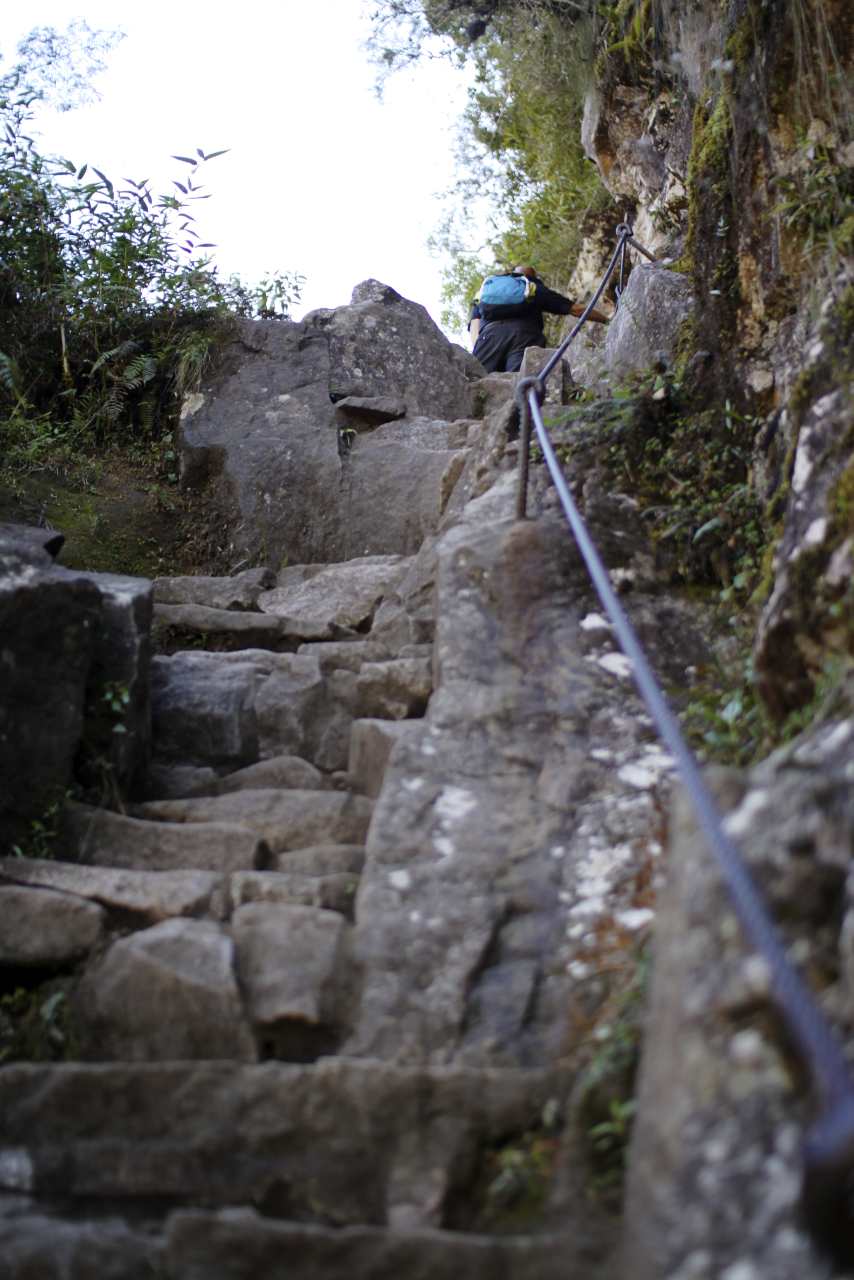
The path.
The steps—the climb—up to the top was made by the Incas. The steps are steep, but when they get really steep there's a rope (which was not made by the Incas). However, about two-thirds of the way up the trail takes a break from steps. Now the trail was just a steep, narrow trail of mountain. Here and there you'd get that rope, but more often than not you just relied on your balance and footing as you climbed ragged rocks up and up and up. You look over the edge, which is inches from you, and see just how high you are and just how easy it would be to make a mistake and fall off the mountain.

At this point it struck me: if something were to happen, there's no one to fall back on. There aren't park rangers or security guards on the mountain. If you were step wrong and shatter your ankle, there's no way you're getting down the mountain without using that same ankle. If you have a heart attack, there's no one to call for a helicopter—and if there were it would be impossible for the helicopter to pick you up from the mountain side. If you trip and fall, you could actually plummet from the side of the mountain.

Huaynapicchu.
We were all tourists climbing this mountain, but we were each entirely alone, entirely responsible for ourselves, entirely independent. It was not entirely familiar for me. My dependence was wrenched from me because Huaynapicchu rendered it impossible to hold onto. It was empowering. More so than at any other time in my life, I felt a powerful sense of being alone; alone in the sense of being a lone one: a lone person, independent of all others. Not a sense of irresponsibility of my effect on others, but a sense of total responsibility for my effect on myself.

At the top of Huaynapicchu I looked around and saw everyone else who had hiked to the peak as well, all on our own, each one of us. I've never felt or been quite as accountable for my actions as at that moment. Going back down the mountain the feeling stayed with me. The deep, clear breathes of independence at the peak of Huaynapicchu were very unfamiliar but very welcome.

Muestra de heces

Sixty-three.
Today you'll learn how to say "feces sample" if you look again at the title of this post. A week ago Brandon and I spent our days at the clinic working in the laboratory. It's a very interesting place to work. It's also really fun because the people in the lab are hilarious and really relaxed.

Most days the lab has been my favorite place to work because the people are so great. However, one Monday about a week ago, the lab was a pretty crappy place. Let's take that literally. On a regular day there are about 10 sample of urine, 15 samples of feces, and plenty of blood samples.

On the Monday I'm talking about there were 63 poop samples! It was a day full of a gracious amount of smells and I don't care to repeat it. The poop never stopped showing up at the window. We'd finish making 10 slides and then 10 more would magically appear—one of the worst kinds of surprises indeed.

Since that Monday I've worked more in the lab again (after really psyching myself up) but we've never come close to 63 poop samples again. You have to be thankful for small miracles.

My grandparents were right

Just before leaving for Peru my grandparents asked if I had packed peanut butter. They told me that I'd want some as a taste of home down in Peru. I thought, Oh I've never been homesick so that won't be a problem. Nevertheless, peanut butter sounded like a good idea so I planned on getting to the store before leaving Bismarck to go pick some up. In the rush of finishing packing, I forgot to make that trip.

Flying somewhere over the U.S. I remembered that I forgot to make that trip. It would have been nice, but I'll be fine, I thought. And for a while I was fine.

A short while though. About a week after arriving I came down with giardia, and at that point there was nothing I wanted more than a taste of home. It was peanut butter that I was craving, and the craving never stopped. One day, in fact, I payed over $2.00 just for a Reese's (which are a rare animal here). They simply don't eat peanut butter down here in Peru. It's nowhere to be found.

But I kept looking, and just a few days ago I found some peanut butter. A month and a half of looking in every shop for peanut butter and now I have some. It cost 19.00 soles which comes to around $8.00 but it was worth it, because my grandparents were right. When you're traveling for an extended period of time it's really nice to have a taste of home.

Cold canned coke


On Sunday Brandon and I caught a tour of the Sacred Valley of the Incas. It included a few different ruins and a great lunch. After leaving the last site at Ollantaytambo, the (amazing) water temple, we were just about on the bus when Brandon noticed something.

Coke is very common here in Peru in plastic bottles and glass Cokes are abundant as well. But for whatever reason cans of anything are very rare. I've only seen 2 or 3 little shops that carry cans of Coke, and you've got to take advantage of those opportunities. They are few and far between.

It's also common for pop to be in refrigerator displays--like you'd see at the grocery store--but it's very uncommon for those displays to be turned on and keeping the pop cold. Why? I can't figure out why you'd buy the display and not turn it on, but maybe they come free or something.

But on this occasion what Brandon noticed was a fridge display of cold cans of Coke. The stars had aligned. I jumped on this opportunity without any hesitation because a can of Coke is far superior to a bottle of it. There's just something worlds better about it (although fountain Coke is, in my opinion, the best).

Peru made potatoes first

There are 1000s of different potato species.
Did you know that potatoes came from Peru? I feel like we learned that in World History one year, so when someone told me that this summer, my brain went Oh yeah. Anyway, the people here know it and they really love it too. And they really love the potato: it's in almost every dish I've had since arriving a month ago.

The Incans or pre-Incans were the first to domesticate the potato some time between 8000 and 5000 B.C. Then they fell in love. We, myself and the scientists, believe that Spain brought the potato back to Europe some time in the 16th century while they were conquistadoring down in Peru. And then the world fell in love with the potato.

Today there are thousands of distinct species of potato and all ones I've tried down here have been pretty great. I'll be eating some great french fries—which are served at tons of meals—only to find they aren't french fries at all, but some potato-cousin-fries.

Peru, I'd like to thank you.

Awanakancha

Feeding the baby llama.
I forgot to write anything about Awanakancha. It's a little, pretty touristy, "village" outside of city called Pisac. This was one of the first places that I visited, it was during my first or second week in Peru. Every week Projects Abroad organizes a social for all the volunteers in Peru, and going to Awanakancha was one of those socials.

Mom and baby alpacas.
So, there are a few things that Awanakancha is all about:
  • Llamas, 
  • Alpacas, 
  • A few undomesticated cousins of the llama/alpaca family, 
  • Potatos and corn, and 
  • Weaving and weaved goods.

Beyond being about those aforementioned items, the place is also all about letting you feed, pet, and ride the llamas and alpacas! (I'm lying about the riding part) It was a lot of fun. I had no idea that these animals were so docile and friendly—I didn't think they were vicious of course, but it turns out they really want to be your friend... especially if you have the grass they like.

The potato and weaving parts of Awanakancha almost come as an afterthought. However, they were still pretty interesting to learn about. I'll have a separate post about potatoes tomorrow so for now I'll talk about weaving for a second and then leave you in peace.

The picture to the left is an example of how various peruvian natives weave using a special type of loom. I don't know much about that process other than it takes a long time and they use a llama bone during the process. The coloring process is pretty interesting. First they have to spin the alpaca fur/wool into string/yarn. Then, using various bugs, herbs, or other organic means, they give the string/yarn its different colors through boiling it with dyes. Red dye, for example, is made by crushing a certain insect.

It was interesting to learn about the weaving and potatoes of Peru, but the best part by far was hanging out with llamas and alpacas.

Incans

Temple of the 3 Windows.
It's easy to look at Machu Picchu and think Wow, I can't believe how intelligent and organized you'd have to be to have created such an incredible place. Machu Picchu leaves you with this sense of awe because you see what human beings are capable of achieving. It's really an incredible place—it's insanely great.

The people behind the place are even more incredible, even insanely greater.

The Incans created an empire throughout what is now Peru through the traditional means of conquering but also through showing people a much superior way to live. This lifestyle that they believed in and lived was based on three tentpole guidelines:
  1. Don't Lie.
  2. Don't Steal.
  3. Don't be Lazy.
(The Temple of the 3 Windows served as a reminder of these three tentpole guidelines. You can find a Temple of 3 Windows at most Incan ruins for this reason.)

They boiled down, sifted through, and condensed the secret of life to just three guidelines. And it really worked for them. If you think about it, those three guidelines can well guide you through the day. The Incans and their empire were a testament to these beliefs; plus, they extrapolated on them.

The Incans had taxes, like all societies, but their taxes were a little different; your tax was a month of work per year for the empire: "Don't be Lazy." And the work was tough, but not what you think. There was constant music and plenty of food—not the slavery most societies have subscribed to. In fact when the Spanish came, they wrote of Incan work by noting that it was organized, joyful, voluntary, and that the workers sang as they works. Through this tax of work they were able to build incredible places such as Machu Picchu and Sacsayhuaman as well as build a free new home for every newlywed couple.

As I learned all of these things during our Machu Picchu tour, I was more and more impressed by the Incans. They really had things worked out. It's a little paradoxical that the Spanish were similarly impressed as they wrote again and again about how great and organized a society the Incans had, but then the Spanish turned around and killed and conquered that great society. It's a shame. These people were great.

Machu Picchu... is really a mystery

This is really what Machu Picchu looks like. I took that picture. That's crazy, and it's crazier to be there. The place is so much bigger than you expect—pictures don't really do it justice. It's also supposed to be an energy vortex, a place where a considerable amount of positive energy emanates from the earth. I can believe that. It was a very peaceful, take-a-deep-breath kind of place.

Anyway, our guide led us into Machu Picchu and showed us a good view, a better view, and a best view of the ruins (the above picture is from the best view). We were happy that our guide rushed us pretty quickly past good and better, because by the time we got to the best view most of the other tourists—it was kind of sad to be a tourist again—were stuck at the previous two spots.

Actual Machu Picchu.
Along the walk to the best view Cosme, our guide (who has written books about Machu Picchu), told us about some of the interesting history of the ruins. Probably the most interesting tidbit is that we know very little history. When it was found in 1911 the natives who showed it to Hiram Bingham had only come across it 7 years earlier, in 1904—and they were only that far up in the mountains because they were avoiding taxes. They didn't know what it was, when it was made, or what the city was for. In fact we don't even know it's real name; Machu Picchu is actually the mountain in the picture to the left. Everything we know about Machu Picchu has come from archeology and good guesses.

What we've got so far is that the city was a place where the elite lived as well as couples who were planning to get married. For the couples, the city was a testing ground. In Incan culture you had to live together for one year before you could get married—Machu Picchu was one such place that you'd live together because obviously a potential-married couple isn't going to go out and find their own plot of land just to test their relationship. After the year, if you made it, you would actually be given a plot of land and other Incans would come and build you a house on it. As for the elite, they were what you'd think: political and religious leaders as well as very skilled people.

We also know that the city would have been brightly colored in red and yellow because archeologists have found evidence of paint near the walls and buildings of the city. It would have been an even crazier-awesome place at its height, which coincidentally was only 500 years ago. Because Machu Picchu is only 500 years old!

Machu Picchu... is Kind of Like this Song

Animal Life by Shearwater on Grooveshark

When I first saw Machu Picchu—the actual city that all the pictures are talking about—this was the song that was running through my head.

Machu Picchu... is Up

After hiking up to Machu Picchu.
After walking through what seemed plenty like a real-life Disney World, we arrived at a bridge which looked like something out of Jurassic Park. No dinosaurs though, only men asking to see your ticket and passport. This is when I'd usually realize that I forgot my ticket, except on this occasion I had checked maybe 20 times to make sure I had that ticket over the past 2 days. I pulled out the ticket, the passport, and then walked across the bridge.

By this time it was about 5:15 or so and there was very little light. Everything looked blue and black. Thank goodness I had my headlamp—and I'm serious about that; it's a really good headlamp and I really needed it.

We began our ascent. And it was, to my knowledge at the time, quite an ascent. There's a reason that the actual road up to Machu Picchu is home to so many switch-backs—it's a steep climb up. We had steps on our climb, but not the steps you're used to. It's stone steps, ragged stone steps, all the way up. The altitude isn't quite as bad at Machu Picchu, but it still gets to you a bit. And I'm not going to pretend like I didn't get winded.

So after about 25 minutes of climbing I was wishing we were at the top, and about this time the sun was coming up as well. I got through it and at about 35 minutes in the sun was really making its way into the picture. No rays yet, but I didn't need my headlamp anymore.

I took this picture at about 35 minutes in as well. I tried a few tricks but without a tripod I couldn't really capture how sweet the coming sunrise was. Everything was purple and blue as the sun started climbing behind those mountains and it was pretty awe-inspiring to be at the same level as the tops of other mountains.

Just 15 more minutes and we arrived up at the top of our climb by about 6:05 am. The hike up is supposed to take an hour and a half. We did it in an hour. Boom.

After catching our breath and admiring the view we'd achieved through our own labors we waited just a few minutes until our guide, Cosme, arrived. He took us to the line (the back of the line) that leads to the actual gates into Machu Picchu.

Machu Picchu... is like Disney World

Way out of focus. Way early.
After arriving in Aguas Calientes and getting to the hotel we didn't waste much time before having a little supper and then going to bed. The next morning was super early. The alarm went off at 3:55 and was snoozed, then was again snoozed at 4:00 but at 4:05 am we got up to eat breakfast of yogurt, bread, granola, and granola bars. It was early, but the food was pretty filling. Plus you can't be that lethargic when you're about to see Machu Picchu.

By about 4:40 we met with Dom and Lauren in the lobby (pictured above) and from there we walked towards the foot of the mountain. After walking over a train track then a bridge things started to get Disney World-y.

Off to my left was a running river just below a mountain. Everything smelled and looked and sounded (in the dim light of 5:00 am) like Disney World. Animal Kingdom maybe. I then realized that the difference between Disney and where I was was that there the sounds and sights were real. Really real. For a second I thought about how great Disney is to have made places that seem so authentic, then I got back to reality where I was enjoying the base of Machu Picchu in real life. If Disney World is magical, well so was walking to the bottom gates of Machu Picchu.

Venture to Machu Picchu's Foot

PeruRail to Aguas Calientes.
Arriving at Machu Picchu was it's own adventure. First you have to take a bus from Cusco to a city called Ollantaytambo, which is about an hour and a half. Next you have to take a train to Aguas Calientes, which is the city right at the foot of Machu Picchu. You can actually only get there by walking or by train--there are no roads that lead to Aguas Calientes. The train only takes about 2 hours from Ollantaytambo.

Our trip was pretty interesting. First the bus to take us to Ollantaytambo was late by more than an hour, which was further complicated by the parade that blocked the road. There's always a saint being carried somewhere.
Some saint parade.
It was a big deal that the bus was late. Our train was going to leave Ollantaytambo at 7:00 pm and we were still a city away from that destination at 6:35. I asked another passenger how long to Ollantaytambo and they said (in Spanish) "Close to 25 minutes." Great... That really rose my blood pressure and added to how anxious I already was. If we would have missed that train we would have had to buy a whole new ticket--and who knows if there were even any more trains that night.

But we made it. We stepped on the train with about 10 minutes to spare before the train left the station. Pretty lucky.

The train was an interesting time as well. People just breast feed wherever they want down here, and of course one such mother and her crying baby sat right across from Brandon and I. To our left was a girl whose laugh had a knack for driving you crazy and her friend who was making her laugh the whole trip. But, the train had coffee and that really helped the situation a lot.
At the end of this trip, we arrived in the gloriously warm and humid Aguas Calientes at about 9:00 pm. There was a man from our hotel holding a sign reading "MAX" and he led us to our hotel. We stayed at a place called Margarita's House, and I'd recommend it. It was a little taste of home. The beds were so comfortable and the toilet had a toilet seat.
Toilet seats are pretty rare down here for some reason.

See

Didn't I tell you I'd be taking a picture like this. I couldn't believe that this is the real view you get when you visit Machu Picchu. It was incredible. I'll be putting together a video of everything I saw because the scope of that place is just enormous. Pictures don't do it justice at all.

Pre Machu Picchu

Machu Picchu, in case you didn't know.
Tomorrow I'll be taking a picture almost exactly like that one at Machu Picchu. I'm all packed and ready to leave Cusco at about 4:00pm today. After a bus then a train I'll arrive in Aguas Calientes (the city at the foot of Machu Picchu) by about 9:30pm. Then its time to meet with our guide and then catch some sleep. Morning will come real soon because we're climbing up to Machu Picchu—on the road in the picture below—at 5:00 in the morning on Saturday and then spending the day there with some Projects Abroad friends and a great guide (or so we've heard).
Road up to Machu Picchu.

Tiny Little World

IMG 1842
When in North Dakota you're not too surprised if you run into a few people that you know. You might be in Bismarck at a hotel and run into someone you didn't know was going to be there. This doesn't rock your world though, because it's North Dakota and these things happen all the time. I'll come back to this idea.

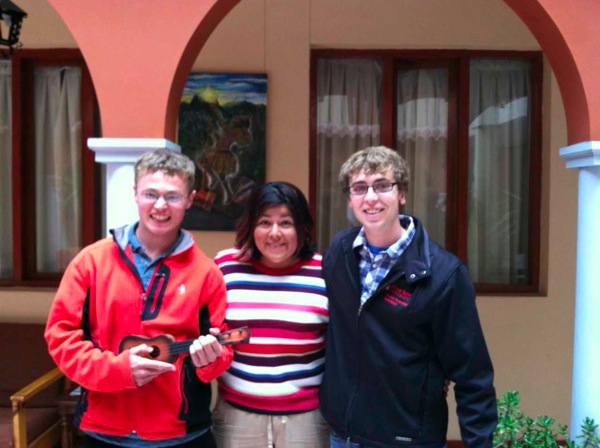
Before I came to Peru I knew that one of my Spanish professors, Kemerly Moorhouse, would be also be here this summer. She brings students from U Mary down every summer because she's a Spanish professor and native of Peru. Thinking that it would be cool to meet up with her and her students, we talked ahead of time to figure out when they would all be in Peru. It turned out that they were around the beginning of this week and part of last week.

They invited Brandon and I out to dinner with them last Sunday. We were to first meet them at their hotel and then walk to restaurant.

Once we got to the hotel we waited a little bit before my professor appeared. And shortly after my professor appeared… SO DID MATT JOHNSON, who part of my professor's group of students (I found out). I couldn't believe it. Remember when we talked about running into people in North Dakota. The same ins't supposed to apply to Peru. There are just too many people, plus it's in South America where North Dakotans are a novelty.

It was great to see people from home and our dinner of calzones was fantastic, even if it did take an hour for us to get our food. The calzones and company made up for the wait.

Construction?

This one is being constructed.
You really can't tell what's being built and what's being destroyed around here. But generally, everything looks like it falls into the second category.

Everything is made out of concrete here because I assume it needs to be that way to withstand the rainy summer season. It sounds like it gets very wet and humid during the summers and I am guessing normal wood structures just wouldn't cut it. But I'm not sure.

Guys are smashing concrete with pick axes wherever you look--and at all hours of the day. There's one building down by the Plaza de Armas that has people working on it until about 11:00pm every day. I guess they mean business. It's just hard to tell what kind of business they mean: construction or destruction?

As these buildings are constructed they just look like a dump until they get all polished and paired up. And virtually all of the work is done by hand--even the cement mixing--so they look like a dump for quite some time. Anywhere you look you can find a building in some stage of being built or destroyed which, aesthetically, is a mess but actually it's a sign of progress.

Everything is a General Store

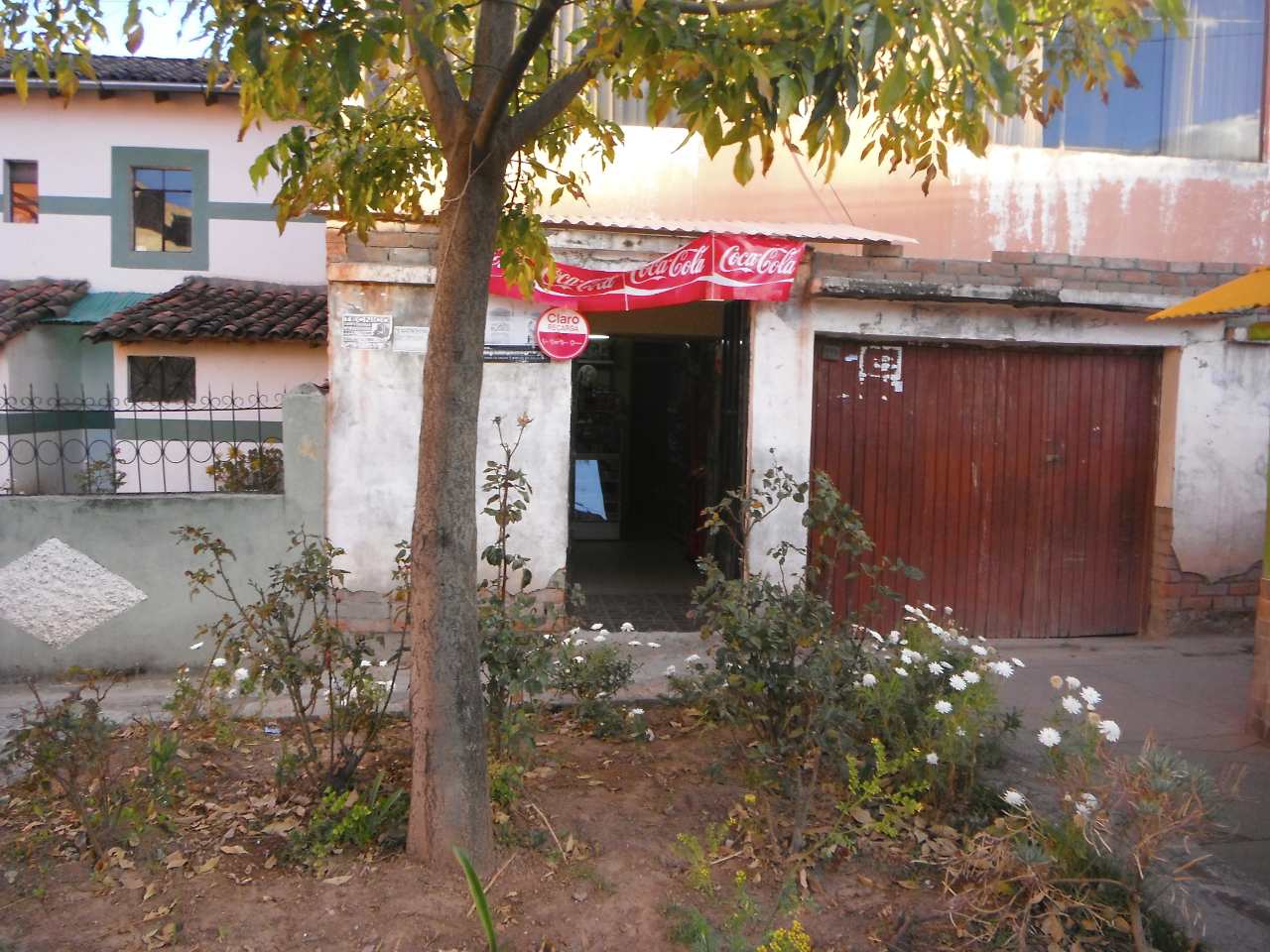
Exhibit: A.

Here in Peru, do you need to use the internet, wash your clothes, and buy some Doritos? There's a shop for that. Even some homes are that shop.

Many people seem to make their living by using the first floor of their house as a make-shift convenience store. Typical wares include soda, water, snacks, bread, and prepaid phone cards. And these wares are usually sprawled all over every inch of wall and counter space available. The owners are clearly not worried about presentation.

And these shops are everywhere. I can walk in any direction from my host family's house and run into one of these shops in under a minute. It's actually very convenient. Maybe too convenient--I can (and do) buy a Coke at any hour of the day. Because that's the other thing: they're open just as long as the owner wants to hang out there. And when you work out of your entry room of your own house, you can hang out there all hours of the day.

Hospital Times

Looking in the front doors of the clinic I've been working at.

I have MADE gauze and cotton balls--yes, just like they might have in the 1920's. I betcha they also did that in the Civil War.

Things are different here in Peru. Just a little different. Some of it isn't so bad, because we're pretty wasteful in our healthcare system. But some of it really sketches me out: things like MAKING gauze and cotton balls. I'm not a machine. We have machines for this! There is also a hand towel, singular. There are not hand towels, plural, in the form of paper towels. What you will find is a towel labeled "manos." With this, dry your hands, as so many have before you.

Patient privacy is a thing of the future. As you're cleaning a huge gash or talking about an illness with a patient, another patient might just walk into the room. Or maybe they've been sitting there the whole time because they were there first. Maybe they're passing out after giving a blood sample. Who knows. You couldn't look long enough to find HIPPA.

Gloves. For the birds. There's not really much to say about them and there aren't really that many of them. You use them when you're about to be bled on and that's it. I suppose you also use them when you're preparing a feces sample to be checked out under the microscope.

The lab here is a real lab. You don't place a piece of blood in a spacemachine that tells you all about it. You actually have to spin the blood, take it to dinner, and then manually measure the hematocrit using a plastic instrument. This is actually really beneficial for learning because you are able to physically see what a low or a high hematocrit looks like, for example. You don't get that with a magic-lab-spacemachine in the US.

Also dogs just run in and out of this little clinic as they please. Sometimes kids play with them. Other times people say ch-ch-ch and chase them out. Still other times they just take a nap by the pharmacy window. I don't believe I've stressed that these are wild, street dogs. They don't have collars or houses or Purina. So they just do what they want all the time. All dogs go to heaven.

Some things are the same though. People need shots, people need wounds cleaned, people need nebulizer treatments, and some people need their feces tested for giardia. Those things don't change and the basic treatments and procedures are roughly what you'd expect. But it's what you'd expect if you weren't living in a culture of abundance and surplus. So there are fewer needles, vials, sutures, and you MAKE gauze. You begin to appreciate how much we really have to work with in our hospitals. You've really got to McGyver things here sometimes.

A lot is different but I can agree with some of the differences. Not on an evidence-based level for sure, but on a come-on level perhaps. Like the gloves. In the US, I go through 30 pairs of gloves while asking a patient their name and date of birth. Here I've used about 3 pairs a day. We could really tone down the gloves and for the most part it wouldn't kill us all. It's also refreshing not to have to worry if each patient wants to sue everyone. I'm all for patient privacy, and do my best to maintain it down here, but it's for the patient… not to protect myself from getting sued. That's the way it should be. Also, dogs in the hospital: sign me up.

Lake Titicaca: LOST Style (part 1)


This last weekend Brandon and I went to Lake Titicaca and took a 2 day tour around three islands: Uros, Amantani, and Taquile. The total tour only cost S/. 75, which comes to about $30. It included all transportation, 3 meals, and lodging. Sick deals, sick deals.

As I tell about the trip, I hope you’ve seen LOST.

We took a bus from Cusco to Puno late Friday night. The bus didn’t crash on the island, but the way our driver careened about it was like crashing for 8 hours straight. Eventually we arrived at about 6:30 in the morning, just as the sun was coming up. A very sales-womanly lady pushed a tour on us (the one I’ve previously mentioned) and it sounded like a good deal so we took it.

After getting picked up from the bus terminal another bus took us to our boat--NOT PENNY’S BOAT. There were about 15 other people on the same tour. Immediately upon sitting down a wandering pan-flutist forced his music on us, and promptly insisted we pay him. In the US we have street performers and sometimes you toss a dollar in their hat if you appreciate what they’ve got going on. Here in Peru they practice a more proactive version. They corner you, then treat you like an ATM. I only had change so that’s all I gave the guy. Also he pan-fluted some Simon and Garfunkle.

And we’re off! The first stop was the floating islands of Uros. They float and you can move the island whenever you need to. You don’t even have to turn the wheel; just lift the anchors.

These islands are made of reeds and roots. There's a particular type of dense, cork-like root that forms the base of the islands. You lash these roots together then you start putting reeds on top. The island we stopped on was 4 feet thick: 1 ½ feet of roots, 3 ½ feet of reeds. The island was 8 years old. Each island can last about 30 to 40 years before it starts sinking into the lake.

The Uros people live in huts like the one in the picture and rarely step foot on solid ground… they know it's best not to leave the island. They survive mostly by fishing and tourism. You're welcome Uros people. They were also very genuine and weren't trying to sell you something every other second.

Me and a hut.

← Previous Page

Blogs I Read

Powered by Blogger.